
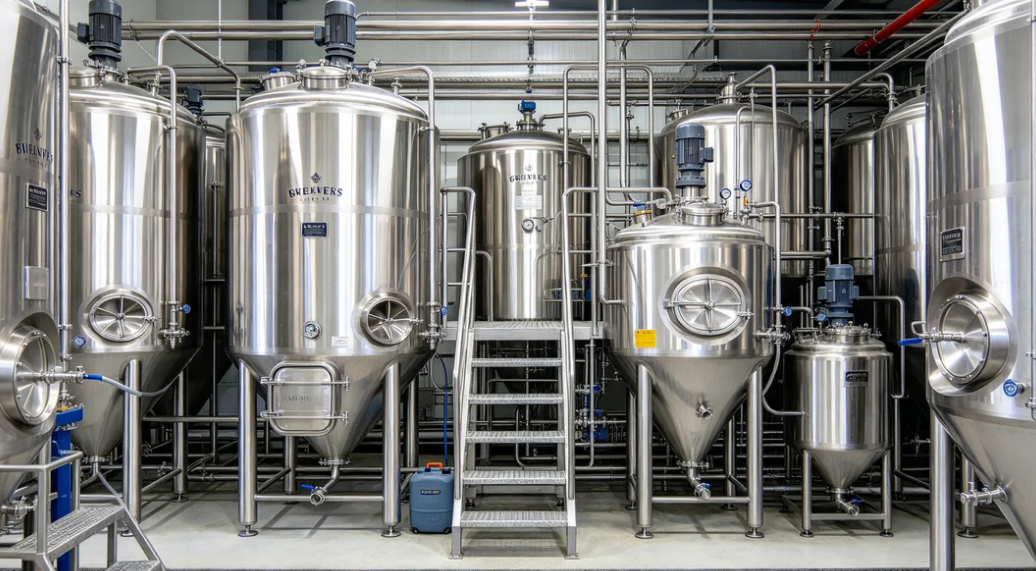
Choosing the right brewing supplies for automatic control can significantly improve production consistency, operating efficiency, and process management in commercial breweries. A suitable system should combine brewhouse equipment, fermentation tanks, PLC controllers, sensors, pumps, automated valves, and cleaning systems. However, the best configuration depends on production capacity, brewing frequency, labor requirements, and investment plans. Buyers should evaluate the complete brewing process rather than focusing only on the control panel when selecting automatic brewing equipment.
What Brewing Supplies Are Required for an Automatic Brewing System?
A complete automatic brewing system requires both production equipment and control components. These components work together to manage different brewing stages and reduce unnecessary manual operations.
The main equipment typically includes:
- Brewhouse Equipment: Mash tuns, lauter tuns, boiling kettles, and whirlpool tanks handle mashing, wort separation, boiling, and clarification.
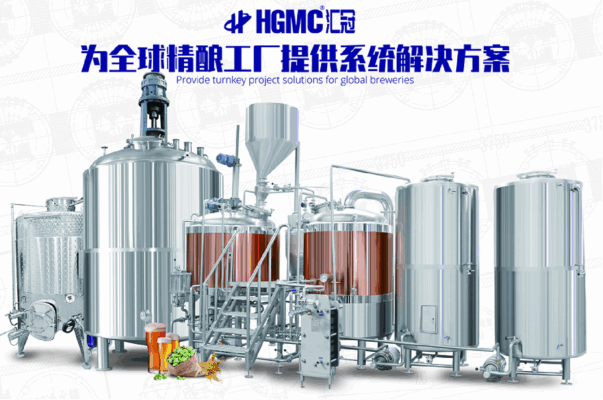
- Fermentation Tanks: Stainless steel fermentation tanks with temperature sensors and cooling jackets help maintain suitable fermentation conditions.
- PLC Control Systems: Programmable logic controllers manage heating, pumps, valves, and selected production sequences.
- Sensors and Instruments: Temperature, pressure, liquid level, and flow sensors provide real-time operating information.
- Pumps and Automated Valves: These components control liquid transfer between vessels and support automated process operations.
- CIP Cleaning Systems: Automated cleaning equipment manages circulation, cleaning temperature, and operating time.
The exact equipment configuration depends on the brewery’s production requirements. A small commercial brewery may only need automatic temperature control, while a larger facility may benefit from centralized automation across brewing, fermentation, and cleaning operations.
Which Control Components Are Most Important for Brewing Automation?
The performance of an automatic brewing system depends on the coordination between its electrical components, sensors, and control software.
1. PLC Controllers and Touchscreen Interfaces
PLC controllers act as the central management unit of an automatic brewing system. They receive information from connected sensors and execute programmed instructions.
Through a touchscreen HMI, operators can monitor equipment status, adjust temperature settings, manage production procedures, and respond to alarms. This configuration helps breweries maintain repeatable operating procedures and reduces the need for constant manual adjustments.
2. Temperature and Pressure Sensors
Accurate sensors are essential for maintaining stable brewing conditions. Temperature sensors monitor mash, wort, fermentation, and cleaning temperatures, while pressure sensors help monitor operating conditions inside tanks and pipelines.
Liquid level sensors and flow meters also improve process management by monitoring liquid quantities and transfer rates.
3. Automated Pumps and Valves
Automated pumps and valves help coordinate water, wort, beer, and cleaning solution transfers. Variable-frequency drives (VFDs) can adjust pump speeds when supported by the equipment design.
These components reduce repetitive manual operations and help maintain more consistent transfer procedures.
How Should Buyers Compare Different Brewing Automation Configurations?
Buyers should compare automation levels according to production requirements, labor availability, and investment budgets. A fully automatic system is not always necessary for every commercial brewery.
The following table provides a practical comparison of common equipment configurations.
| Equipment / Function | Semi-Automatic System | Fully Automatic System |
|---|---|---|
| PLC Controller | Basic control | Integrated PLC control |
| Temperature Control | Automatic in selected vessels | Programmable multi-stage control |
| Pump Operation | Manual or assisted | Programmed operation |
| Valve Operation | Mainly manual | Automated valves |
| Fermentation Monitoring | Individual tank control | Centralized monitoring options |
| CIP Cleaning | Manual or semi-automatic | Programmable cleaning cycles |
| Operator Involvement | Higher | Lower for automated tasks |
| Initial Investment | Generally lower | Generally higher |
| Maintenance Requirements | Relatively simple | More electrical and software support |
The actual configuration varies by manufacturer and project specifications. Buyers should request a detailed equipment list, control functions, and technical documentation before making a purchasing decision.
How Does Automatic Control Improve the Brewing Process?
Automatic control improves production by managing important operating parameters throughout the brewing process.
During mashing, temperature controllers maintain programmed temperature stages, helping brewers follow consistent recipes. During lautering and wort transfer, pumps and valves coordinate liquid movement between vessels.
During boiling, the control system can manage heating time and selected process operations. Once the wort enters fermentation tanks, temperature sensors and cooling controls help maintain suitable fermentation conditions.
CIP cleaning systems can also automate cleaning sequences, circulation, and temperature settings. This helps standardize cleaning procedures and reduces repetitive manual work.
However, automation should not replace professional brewing decisions. Experienced brewers still need to manage recipes, evaluate beer quality, and make adjustments when production conditions change.
What Should Buyers Check Before Purchasing Automatic Brewing Supplies?
Selecting suitable brewing supplies requires evaluating the complete production system rather than purchasing individual machines independently.
First, calculate production capacity. Buyers should determine the required batch size, brewing frequency, and annual production target. Brewhouse capacity, fermentation volume, cooling capacity, and packaging speed should work together.
Second, check control system compatibility. Confirm whether the PLC can manage the required sensors, pumps, valves, heating, cooling, and cleaning functions. Buyers should also ask whether manual operation and emergency stop functions are available.
Third, evaluate maintenance and technical support. Sensors, electrical components, and automated valves require regular inspection. Confirm the availability of replacement parts, software support, troubleshooting services, and operator training.
Finally, consider future expansion. A modular control system can make it easier to add fermentation tanks, additional brewing vessels, or packaging equipment as production increases.
Which Automatic Brewing Equipment Solutions Can HGMC Provide?
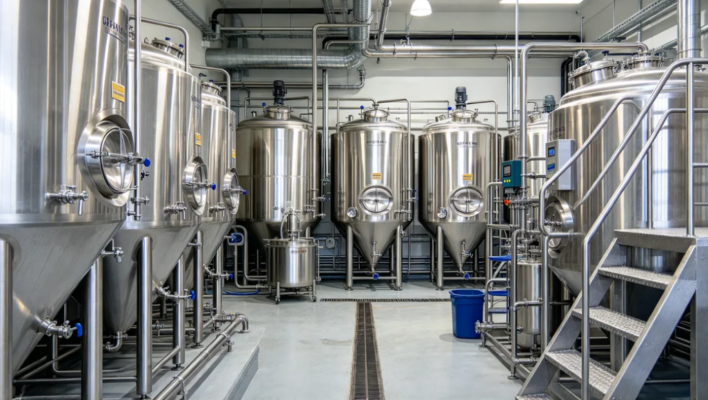
HGMC provides commercial brewing equipment and customized brewery solutions based on production capacity and automation requirements.
Available configurations can include brewhouse systems, stainless steel fermentation tanks, PLC control systems, CIP cleaning equipment, cooling systems, and filling and packaging lines.
For breweries seeking improved process management, Siemens PLC controllers and touchscreen interfaces can also be configured according to project requirements.
Whether buyers are establishing a new brewery or upgrading an existing production facility, selecting compatible equipment from the beginning helps reduce integration difficulties and unnecessary investment.
Conclusion
The best brewing supplies for automatic control are those that match the brewery’s production requirements, operating procedures, and long-term development plans. PLC controllers, sensors, pumps, automated valves, and fermentation temperature controls should work together as an integrated system.
Instead of choosing the most complicated automation package, buyers should focus on practical functions, equipment compatibility, maintenance requirements, and future expansion possibilities. A properly configured automatic brewing system can support consistent beer production while improving overall brewery management.
Frequently Asked Questions
1. What Equipment Is Needed for an Automatic Brewing System?
A typical automatic brewing system includes brewhouse vessels, fermentation tanks, PLC controllers, temperature sensors, pressure instruments, automated valves, pumps, and CIP cleaning equipment. The final configuration depends on production capacity and automation requirements.
2. Is a Fully Automatic Brewing System Better Than a Semi-Automatic System?
Not necessarily. Semi-automatic systems are suitable for smaller breweries or businesses with experienced brewing operators. Fully automatic systems are more suitable for larger production facilities requiring centralized control and frequent production cycles.
3. How Much Does Automatic Brewing Equipment Cost?
The investment depends on brewing capacity, vessel configuration, stainless steel specifications, automation level, and additional equipment. A fully integrated system generally requires a higher initial investment than a basic semi-automatic configuration. Buyers should request a customized quotation based on their production requirements.
4. Can Automatic Brewing Equipment Be Customized?
Yes. Commercial brewing equipment can be customized according to batch capacity, heating method, fermentation requirements, control functions, and packaging needs. Buyers should provide their expected production output and available installation space to help manufacturers prepare a suitable equipment proposal.
