
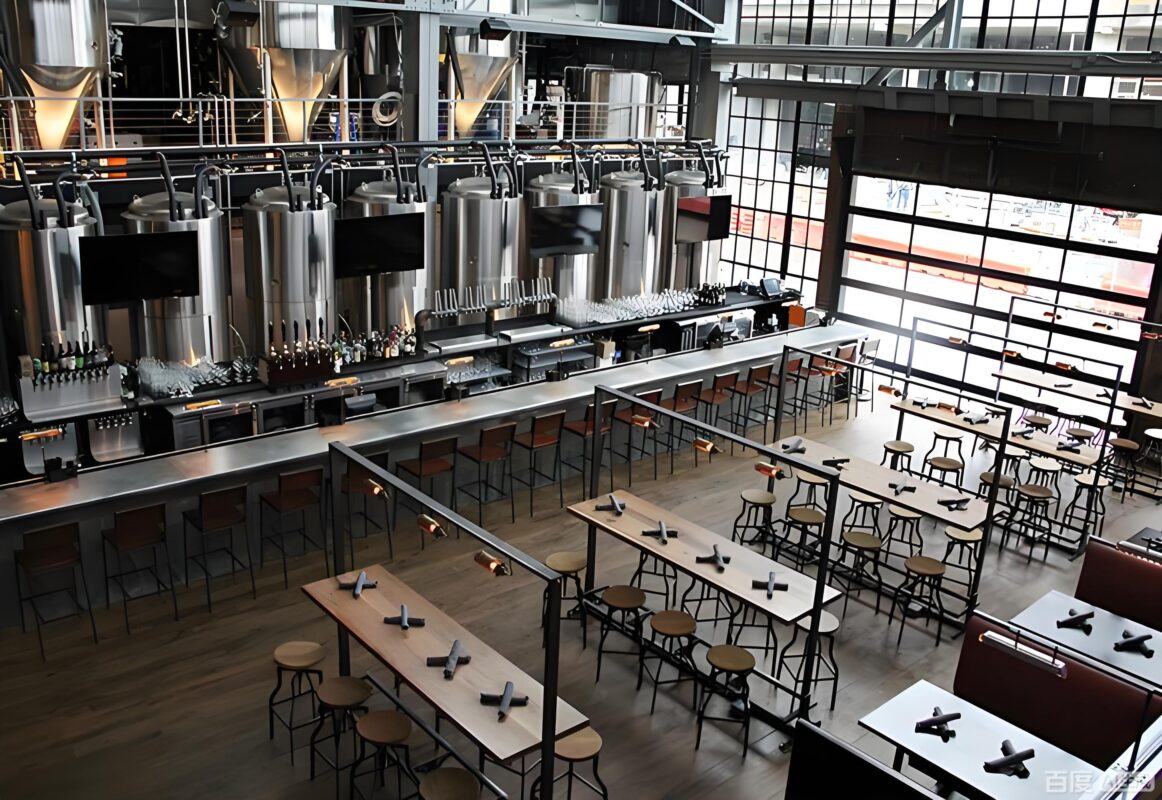
Discover how to choose the right craft brewery equipment for your brewery project. Learn about equipment sizes, prices, materials, certifications, key specifications, and supplier selection tips to build a reliable commercial brewing system.
The most important factor when buying Craft brewery equipment includes a complete range of brewing systems, including brewhouses, fermentation tanks, bright beer tanks, glycol cooling systems, CIP cleaning systems, packaging equipment, and control systems. A professional setup allows breweries to maintain consistent quality while improving operational efficiency.
Bef
- Target annual beer production
- Batch si
- A
- Brewing frequency
- Automation expectation
- Local certification standards
What Types of Craft Brewery Equipment Are Required for a Complete Brewery?
A complete brewery requires more than just a brewing machine. The right craft brewery equipment system should include brewhouse equipment, fermentation vessels, cooling systems, cleaning systems, packaging solutions, and control systems to ensure stable production, consistent beer quality, and efficient operation. Choosing a complete equipment package helps breweries avoid production bottlenecks and creates a scalable foundation for future expansion.
A professional brewery setup is designed as an integrated production system where each component works together. From converting malt into wort to fermenting, conditioning, and packaging finished beer, every stage requires specialized equipment.
The main categories of craft brewery equipment include:
- Brewhouse systems
- Fermentation tanks
- Bright beer tanks
- Glycol cooling systems
- CIP cleaning systems
- Water and utility systems
- Packaging equipment
- Automation and control systems
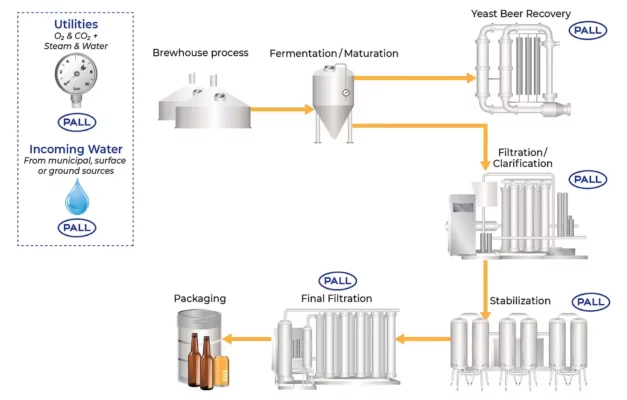
What Is the Role of a Brewhouse System in Craft Brewery Equipment?
The brewhouse is the core production unit of any brewery because it controls the brewing process from raw materials to finished wort. A properly designed brewhouse improves efficiency, reduces energy consumption, and ensures consistent beer recipes.
A complete brewhouse usually includes several vessels:
Mash Tun
The mash tun is where crushed malt is mixed with hot water to extract fermentable sugars. Precise temperature control is essential because it directly affects beer flavor, alcohol content, and fermentation performance.
Key features include:
- Stainless steel construction
- Temperature monitoring system
- Insulated vessel design
- False bottom filtration system
Lauter Tun
The lauter tun separates liquid wort from spent grain. Efficient filtration improves wort clarity and increases raw material utilization.
Important specifications include:
- Slotted screen design
- Sparging system
- Grain removal system
- Sanitary piping connections
Brew Kettle
The brew kettle is responsible for wort boiling, hop addition, and sterilization. Commercial systems often include steam jackets or electric heating systems for precise temperature control.
Common options:
- Electric heating brewhouse
- Steam heating brewhouse
- Gas-fired heating system
Whirlpool Tank
The whirlpool vessel separates hop particles and solid materials from wort through centrifugal movement.
A well-designed whirlpool system improves:
- Wort clarity
- Brewing efficiency
- Beer consistency
Why Are Fermentation Tanks Essential in Craft Brewery Equipment?
Fermentation tanks are among the most important components because they directly influence beer quality, flavor development, and production capacity.
Professional craft brewery equipment commonly uses stainless steel conical fermentation tanks because they provide excellent durability, hygiene, and temperature control.
Modern fermentation tanks usually include:
| Feature | Function |
|---|---|
| Cooling Jacket | Maintains accurate fermentation temperature |
| Pressure Valve | Controls internal tank pressure |
| CIP Spray Ball | Enables automatic cleaning |
| Sampling Valve | Allows quality inspection |
| Temperature Sensor | Monitors fermentation conditions |
| Conical Bottom | Improves yeast collection |
Conical fermenters allow breweries to complete fermentation and yeast collection in the same vessel, improving efficiency and reducing transfer losses.
The number of fermentation tanks required depends on:
- Brewing frequency
- Beer style
- Fermentation time
- Expected sales volume
For example, a brewery producing multiple beer styles may require more tanks than a brewery producing only one flagship beer.
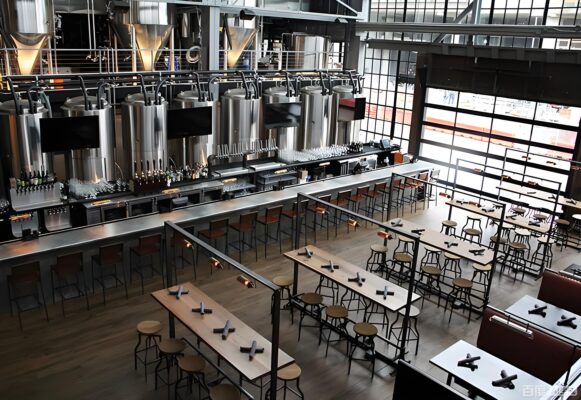
What Are Bright Beer Tanks Used for in a Commercial Brewery?
Bright beer tanks are used after fermentation for beer maturation, carbonation, storage, and packaging preparation. They are an important part of commercial brewery equipment because they improve production flexibility.
Bright tanks help breweries:
- Maintain consistent carbonation levels
- Store finished beer before packaging
- Improve beer clarity
- Increase packaging efficiency
Typical bright tank specifications include:
| Parameter | Standard Range |
|---|---|
| Material | SUS304 Stainless Steel |
| Working Pressure | 2–3 bar |
| Surface Finish | Sanitary polished interior |
| Cooling Method | Glycol jacket |
| Applications | Carbonation, storage, serving |
For breweries with taprooms, bright tanks can also serve as serving tanks when connected directly to dispensing systems.
Why Does a Brewery Need a Glycol Cooling System?
A reliable cooling system is essential because fermentation requires precise temperature control. Without stable cooling, yeast performance may become inconsistent and negatively affect beer quality.
A complete glycol cooling system usually includes:
- Glycol chiller
- Glycol water tank
- Cooling pumps
- Pipeline system
- Temperature controllers
The cooling system controls:
- Fermentation temperature
- Lagering temperature
- Bright tank temperature
- Cold storage conditions
For larger breweries, an efficient glycol system can significantly reduce energy consumption and operating costs.
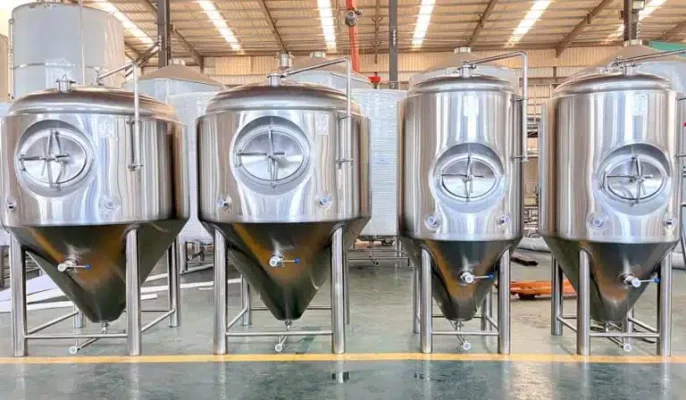
What Is the Purpose of a CIP System in Craft Brewery Equipment?
A CIP (Clean-In-Place) system improves brewery hygiene by allowing tanks and pipelines to be cleaned without disassembly.
A professional CIP system usually includes:
- Cleaning tanks
- Pumps
- Heating system
- Spray equipment
- Chemical circulation system
The main benefits include:
- Reduced labor requirements
- Faster cleaning procedures
- Improved sanitation
- Lower contamination risk
For commercial breweries, CIP systems are essential because maintaining sanitary conditions directly affects beer quality and production reliability.
What Additional Equipment Is Needed for a Complete Brewery Setup?
A complete turnkey brewery system requires additional supporting equipment beyond the main brewing vessels.
Water Treatment System
Water quality has a significant impact on beer flavor. Many breweries install water treatment equipment to adjust:
- Mineral content
- pH levels
- Hardness
Pumps and Piping System
Sanitary pumps and pipes transfer liquids between different production stages.
Important considerations include:
- Food-grade materials
- Easy cleaning design
- Leak prevention
- Proper flow rates
Air Compressor System
Compressed air is commonly used for:
- Valve operation
- Packaging equipment
- Automation systems
Steam Generator
Large breweries often use steam heating because it provides efficient and stable heat transfer.
What Packaging Equipment Should Breweries Consider?
Packaging equipment allows breweries to deliver finished beer to customers. The right choice depends on sales channels and production scale.
Common packaging options include:
| Packaging Equipment | Suitable Application |
|---|---|
| Manual Bottle Filler | Small breweries and taprooms |
| Semi-Automatic Filler | Growing breweries |
| Can Filling Machine | Retail distribution |
| Keg Filling System | Bars and restaurants |
| Fully Automatic Packaging Line | Large commercial breweries |
A brewery planning regional or national distribution should consider packaging capacity during the initial equipment design stage.
How Does Automation Improve Complete Brewery Equipment Performance?
Automation improves production consistency by reducing manual operation errors and improving process control.
Modern brewery automation systems may include:
- PLC control panels
- Touchscreen operation
- Automatic temperature adjustment
- Recipe management
- Data monitoring
For small breweries, semi-automatic systems provide a balance between cost and efficiency. Larger breweries often choose fully automated commercial brewery equipment to improve productivity and reduce labor costs.
Complete Craft Brewery Equipment Checklist
Before purchasing a complete brewery system, buyers should confirm whether the quotation includes:
| Equipment Category | Included Items |
|---|---|
| Brewing System | Mash tun, lauter tun, kettle, whirlpool |
| Fermentation System | Conical fermenters, valves, sensors |
| Storage System | Bright tanks, serving tanks |
| Cooling System | Glycol chiller, pumps, pipes |
| Cleaning System | CIP tanks and cleaning equipment |
| Utility System | Pumps, piping, water treatment |
| Control System | PLC panel, temperature controllers |
| Packaging System | Filling and packaging equipment |
A complete checklist helps buyers compare suppliers accurately and avoid unexpected additional costs during installation.
How Much Does Craft Brewery Equipment Cost?
The price of craft brewery equipment depends on capacity, materials, automation level, and included components. Buyers should compare complete system specifications instead of focusing only on the lowest quotation.
Typical published price ranges include:
| Equipment Category | Capacity Range | Approximate Price Range |
|---|---|---|
| Microbrewery Equipment Package | 3–15 BBL | USD $30,000–$80,000 |
| Entry Commercial Brewery System | Around 10 BBL | USD $50,000–$80,000 |
| 20–50 BBL Commercial System | Customized | Quotation Required |
| 50+ BBL Industrial Brewery System | Customized | Quotation Required |
The final cost is influenced by several factors:
Equipment Material
SUS304 stainless steel is the industry standard for most craft brewery applications. Higher-grade materials may increase costs but improve durability.
Automation Level
Manual systems are cheaper but require more labor. Automated PLC-controlled systems improve consistency and reduce operational errors.
Tank Quantity
More fermentation tanks increase production flexibility but also increase:
- Equipment cost
- Floor space requirements
- Cooling demand
Installation and Shipping
International buyers should consider:
- Transportation costs
- Import duties
- Installation support
- Local electrical requirements
A professional brewery equipment supplier should provide a complete quotation covering equipment scope and excluded items.
How Can Buyers Select a Reliable Craft Brewery Equipment Supplier?
The most critical step in purchasing craft brewery equipment is choosing a supplier with engineering capability, manufacturing experience, and after-sales support. A low equipment price does not always mean lower total investment because poor-quality systems may create maintenance problems and production losses.
A professional brewery equipment supplier should provide:
- Detailed equipment drawings
- Complete technical specifications
- Material certificates
- Welding quality records
- Pressure testing documents
- Installation guidance
- Spare parts support
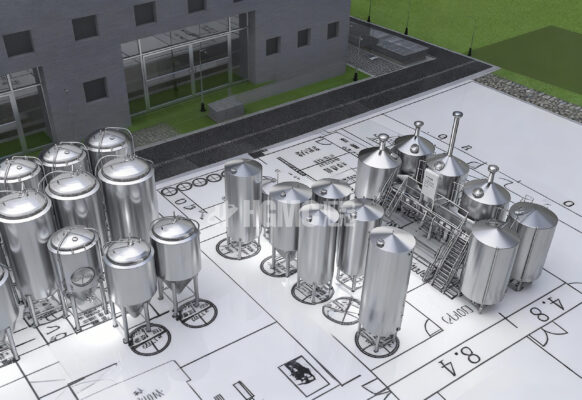
Experienced manufacturers usually help customers design the complete brewing workflow, including brewhouse layout, tank quantity, cooling requirements, and future expansion plans.
When evaluating suppliers, buyers should review:
Manufacturing Experience
A supplier specializing in brewery systems understands brewing processes better than general stainless steel fabricators. Brewing equipment requires sanitary design, precise temperature control, and pressure vessel knowledge.
Customization Capability
Every brewery has different requirements. A flexible supplier should customize:
- Tank dimensions
- Pipe connections
- Heating methods
- Automation systems
- Control panels
- Brewery layouts
Quality Control Process
High-quality craft brewery equipment should include inspection procedures such as:
- Stainless steel material verification
- Internal polishing inspection
- Welding inspection
- Leakage testing
- Pressure testing
Stainless steel 304 and 316 are commonly used in brewery applications because they provide corrosion resistance and easy sanitation.
What Certifications Should Craft Brewery Equipment Have?
The correct certifications depend on the destination market, but compliance documents are essential for commercial brewery projects. Buyers should confirm certification requirements before ordering equipment.
Common certifications include:
| Certification | Purpose | Applicable Equipment |
|---|---|---|
| CE Certification | European safety compliance | Brewery tanks and electrical systems |
| ASME Standard | Pressure vessel safety | Pressure-rated fermentation tanks |
| ISO 9001 | Manufacturing quality management | Equipment manufacturing process |
| FDA Compliance | Food contact safety | Stainless steel surfaces |
| UL Certification | Electrical safety in North America | Control systems |
Pressure-rated brewing vessels require special attention because fermentation and carbonation involve internal pressure. Buyers should confirm design pressure, test pressure, and applicable standards before purchase.
For international brewery projects, certification documentation can simplify customs clearance, installation approval, and future expansion.
What Craft Brewery Equipment Specifications Should Buyers Compare?
The most effective way to compare suppliers is to evaluate technical specifications instead of only comparing prices.
The following table shows common specifications buyers should review:
| Equipment Item | Standard Specification | Premium Option | Purchasing Consideration |
|---|---|---|---|
| Brewhouse Material | SUS304 Stainless Steel | SUS316L Stainless Steel | Choose based on budget and environment |
| Fermentation Tank Type | Conical Fermenter | Unitank Fermenter | Unitanks combine fermentation and conditioning |
| Tank Volume | 500L–5000L+ | Customized Capacity | Match production schedule |
| Heating Method | Electric Heating | Steam Heating | Steam improves efficiency for larger breweries |
| Cooling System | Glycol Cooling Jacket | Multi-zone Cooling Jacket | Improves temperature accuracy |
| Control System | Manual Control | PLC Automatic Control | Automation reduces labor requirements |
| Surface Finish | Sanitary Polish | Mirror Electropolishing | Improves cleaning performance |
| Certification | CE / ISO Documents | ASME / Market-Specific Approval | Required for certain regions |
Fermentation tanks are especially important because they control yeast activity, temperature stability, and beer consistency. Professional systems typically include cooling jackets, pressure controls, sanitary valves, and CIP cleaning functions.
How Does Automation Improve Craft Brewery Equipment Performance?
Automation improves consistency, efficiency, and production management. However, the right automation level depends on brewery size and operating goals.
Small breweries often choose semi-automatic systems because they provide:
- Lower investment costs
- Simple operation
- Easy maintenance
Growing breweries usually benefit from PLC automation because it provides:
- Accurate temperature control
- Automated pump operation
- Recipe management
- Production data recording
- Reduced human error
A fully automated turnkey brewery system is suitable for commercial breweries that require repeatable production quality and efficient labor management.
How Should Buyers Plan Future Expansion When Purchasing Craft Brewery Equipment?
The best equipment investment should support future brewery growth. Buying only for current demand may create limitations within a few years.
A scalable brewery design should consider:
Additional Fermentation Capacity
Adding more fermentation tanks is usually easier than replacing an entire brewhouse.
For example:
A brewery may initially purchase:
- 10 BBL brewhouse
- 4 fermentation tanks
- 1 bright tank
Later expansion may include:
- Additional fermenters
- More bright tanks
- Larger packaging systems
Flexible Layout Design
Future expansion requires:
- Reserved floor space
- Proper utility planning
- Sufficient cooling capacity
- Expandable electrical systems
Modular Equipment Design
Modular craft brewery equipment allows breweries to increase production without completely rebuilding the facility.
What Are the Most Common Mistakes When Buying Craft Brewery Equipment?
The biggest purchasing mistake is selecting equipment based only on the lowest price. Cheap equipment may create hidden costs through maintenance, downtime, and inconsistent beer quality.
Common mistakes include:
Choosing Incorrect Equipment Capacity
A brewery that grows quickly may outgrow small equipment within a short period.
Ignoring Utility Requirements
Buyers should calculate:
- Water consumption
- Electricity demand
- Steam requirements
- Cooling capacity
Not Checking Supplier Documentation
Before payment, buyers should request:
- Equipment drawings
- Technical specifications
- Certification documents
- Production timeline
Buying Incomplete Systems
Some quotations exclude important components such as:
- Glycol chillers
- CIP systems
- Pumps
- Control systems
- Installation accessories
A complete turnkey quotation provides a clearer understanding of total project investment.
What Is the Best Craft Brewery Equipment Package for Different Brewery Sizes?
The ideal equipment package depends on production goals.
| Brewery Type | Recommended Equipment Package | Suitable Application |
|---|---|---|
| Brewpub | 3–5 BBL System | Restaurant beer production |
| Startup Craft Brewery | 5–15 BBL System | Local commercial sales |
| Growing Brewery | 15–30 BBL System | Regional distribution |
| Large Craft Brewery | 30+ BBL System | High-volume production |
For most new craft breweries, a modular 5–10 BBL system offers a balance between investment cost and production flexibility.
Frequently Asked Questions About Craft Brewery Equipment
1. What is included in craft brewery equipment?
A complete craft brewery equipment system usually includes a brewhouse, fermentation tanks, bright tanks, cooling system, CIP system, pumps, piping, and control equipment.
2. How much does craft brewery equipment cost?
The cost depends on brewery size, automation level, materials, and customization. Small commercial systems may cost tens of thousands of dollars, while larger turnkey breweries require customized quotations.
3. What size craft brewery equipment should a beginner buy?
Most startup breweries choose 5–10 BBL systems because they provide commercial production capability without excessive initial investment.
4. Is stainless steel necessary for brewery equipment?
Yes. Stainless steel is preferred because it provides corrosion resistance, durability, and sanitary performance. SUS304 is commonly used, while SUS316L may be selected for more demanding environments.
5. What is the difference between a fermenter and a bright tank?
A fermenter is mainly used for yeast fermentation, while a bright tank is used for beer clarification, carbonation, storage, and packaging preparation.
6. Should I choose manual or automatic brewery equipment?
Manual systems are suitable for smaller breweries with limited budgets. Automatic systems are better for breweries requiring consistent production and reduced labor costs.
7. How long does craft brewery equipment last?
High-quality stainless steel brewery equipment can serve for many years when properly maintained, cleaned, and operated according to manufacturer recommendations.
8. What certifications should I request from a brewery equipment supplier?
Buyers should request applicable certification documents such as CE, ISO 9001, pressure testing reports, and material certificates depending on their market requirements.
9. Can brewery equipment be customized?
Yes. Professional manufacturers can customize tank sizes, layouts, heating systems, automation levels, and production capacity according to brewery requirements.
10. How can I choose the right brewery equipment supplier?
Choose suppliers with proven brewery manufacturing experience, transparent specifications, quality documentation, engineering support, and reliable after-sales service.
Final Conclusion: How Can Buyers Make the Best Craft Brewery Equipment Investment?
Selecting the right craft brewery equipment requires more than comparing prices. Successful brewery projects depend on matching equipment capacity, production goals, quality standards, and future expansion plans.
The best solution is a complete brewing system designed around your business model, including properly sized brewhouses, reliable fermentation tanks, efficient cooling systems, and professional technical support.
By working with an experienced brewery equipment supplier, buyers can reduce investment risks, improve beer consistency, and build a brewery system capable of long-term growth. A carefully planned craft brewery equipment investment is not only a production decision but also a foundation for future business success.
