
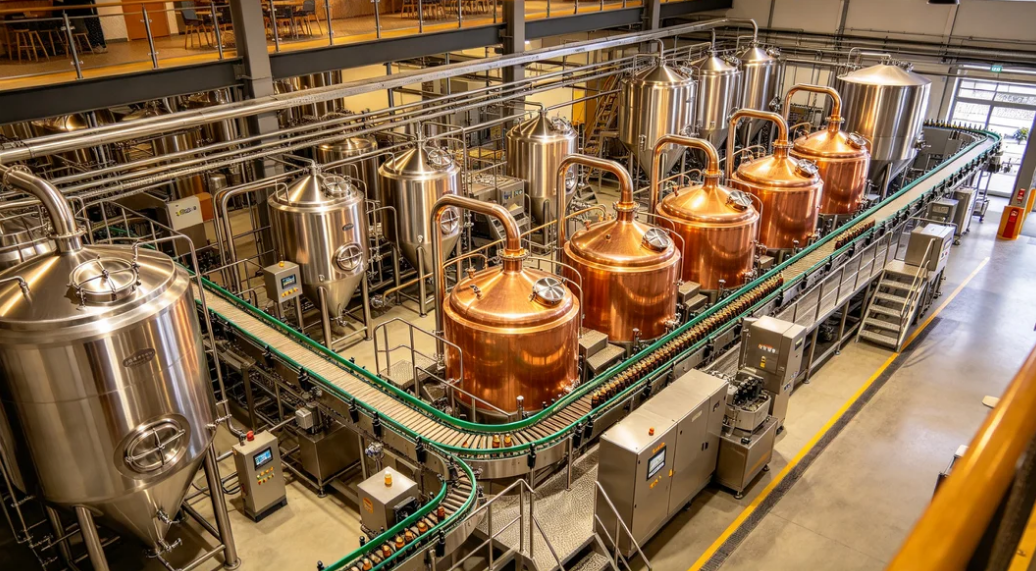
Successful beer factory installation depends on more than purchasing brewing equipment. Buyers need to prepare the facility, confirm utility requirements, coordinate equipment placement, and test the complete production system before brewing begins. A clear installation plan helps reduce unexpected costs, avoid construction delays, and improve operational efficiency. Whether you are building a new brewery or expanding an existing facility, matching the equipment configuration to your production targets is essential for long-term performance.
What Should Buyers Prepare Before Beer Factory Installation?
Proper site preparation helps prevent installation delays and unnecessary modification costs. Before equipment delivery, buyers should confirm the building dimensions, floor loading capacity, drainage, electrical supply, and access routes for large tanks.
Is Your Factory Space Suitable for Brewing Equipment?
The facility must accommodate the equipment footprint, operating areas, and maintenance access. Fermentation tanks may require sufficient ceiling clearance, while brewhouse vessels need convenient connections for pumps, pipes, and utilities.
Buyers should review the manufacturer’s layout drawings before finalizing construction. Door widths, equipment foundations, drainage locations, and transportation routes should also be checked. Identifying these requirements early can prevent costly changes after the equipment arrives.
Which Utilities Are Required?
Utility capacity should match the selected brewing system. Depending on the configuration, a beer factory may require water, electricity, steam, cooling water or glycol, compressed air, and wastewater drainage.
Confirm the connection specifications and required capacities with the equipment supplier. If utilities are undersized or connection points are incorrectly positioned, installation and commissioning may take longer than expected.
How Should Buyers Arrange Beer Factory Equipment?
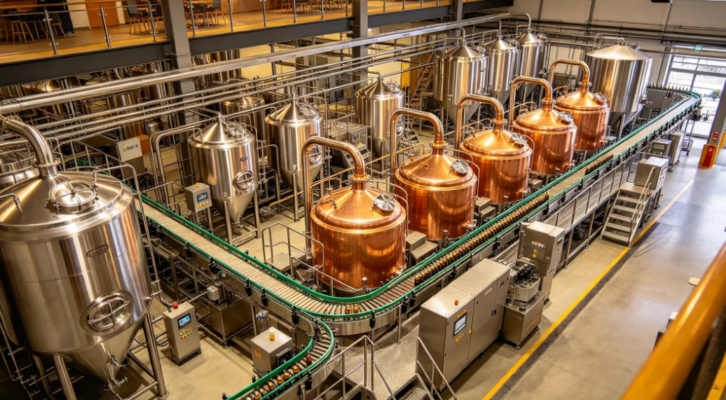
An effective equipment layout follows the beer production process and allows operators to work safely. The typical arrangement includes wort preparation, fermentation, beer storage, and packaging.
Which Equipment Should Be Installed First?
Buyers should coordinate installation according to equipment size, access requirements, and the approved project schedule. Large vessels may need to be moved into position before surrounding equipment or pipework restricts access.
The main equipment categories usually include:
- Brewhouse system: Mash tuns, lauter tuns, brew kettles, and supporting transfer equipment, depending on the configuration.
- Fermentation system: Fermentation tanks, temperature-control connections, and associated piping.
- Beer storage system: Bright beer tanks or other storage vessels, according to production needs.
- Cleaning and utility systems: CIP equipment, pumps, valves, and supporting connections.
- Packaging system: Bottling, canning, or kegging equipment when included in the project.
Not every brewery requires the same equipment combination. Buyers should confirm the complete supply scope and compatibility between individual machines before installation begins.
How Much Space Should Be Reserved for Maintenance?
Maintenance access should be included in the original layout rather than added later. Operators need room to inspect valves, service pumps, clean tanks, and access electrical control panels.
A practical layout should also allow for future expansion. If production demand increases, additional fermentation tanks or packaging equipment may be required. Planning suitable space and utility connections in advance can reduce future renovation costs.
Which Beer Factory Installation Specifications Should Buyers Compare?
Comparing installation requirements helps buyers identify potential technical problems before signing a contract. The following table provides a practical checklist for evaluating a brewery installation project.
| Equipment or project area | Key specifications to confirm | Why it matters |
|---|---|---|
| Brewhouse system | Batch volume, vessel configuration, heating method | Determines brewing capacity and installation needs |
| Fermentation tanks | Working volume, dimensions, cooling connections | Affects cellar layout and temperature control |
| Cooling system | Cooling capacity, glycol connections, operating requirements | Supports stable fermentation temperatures |
| Electrical system | Voltage, frequency, power load, control requirements | Ensures compatibility with the factory supply |
| Piping and drainage | Pipe connections, routing, drainage locations | Supports liquid transfer and cleaning |
| Packaging equipment | Filling capacity, container types, line layout | Helps coordinate downstream production |
Note: Actual specifications depend on the selected equipment model, production capacity, local standards, and factory conditions. Buyers should request approved technical drawings and utility requirements from their supplier.
What Are the Main Steps in Beer Factory Installation?
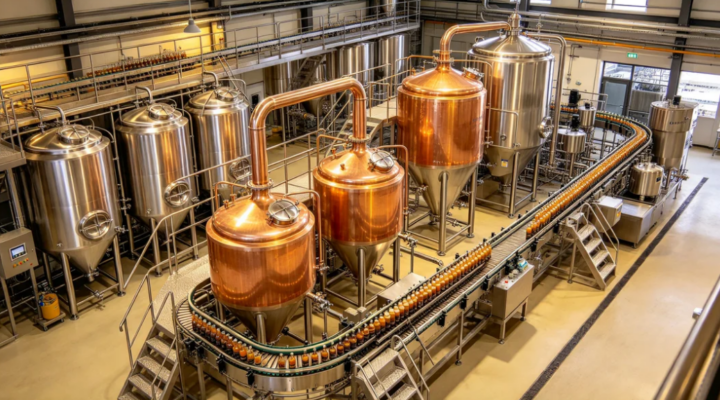
A staged installation process makes it easier to control quality and identify problems before production begins. Most projects follow several key stages.
Step 1: Inspect Delivered Equipment
Check the shipment against the purchase contract, equipment list, and packing documents. Inspect vessels and machinery for transport damage, and confirm that accessories, manuals, and relevant technical documents are available.
Step 2: Install Equipment and Connect Utilities
Position the equipment according to the approved layout. Qualified personnel should complete the required mechanical, electrical, piping, and utility connections in accordance with applicable safety requirements.
During installation, verify alignment, connection compatibility, and access for operation and maintenance.
Step 3: Test and Commission the System
Commissioning confirms whether individual machines and the integrated production system operate as intended. Check pumps, valves, temperature controls, sensors, control panels, and other relevant components.
Carry out the agreed cleaning, functional, and trial-run procedures. Record problems, correct them, and repeat relevant tests before production handover.
Step 4: Train Operators and Complete Handover
Provide operators with equipment manuals, cleaning instructions, maintenance schedules, and operating guidance. Buyers should also confirm warranty terms, technical support arrangements, and the process for reporting equipment faults.
What Affects Beer Factory Installation Cost and Time?
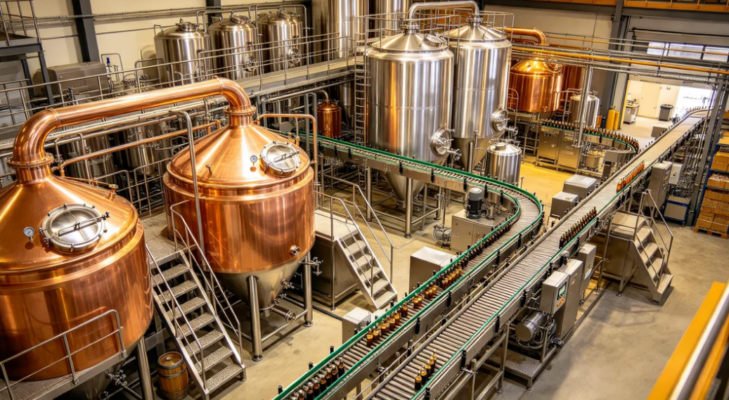
Installation costs depend on project complexity and site readiness, not simply the number of machines purchased. A complete brewery project generally involves more coordination than installing an individual tank.
Important cost and scheduling factors include:
- Factory construction, foundations, and drainage modifications.
- Equipment customization and automation requirements.
- Electrical work, piping, and utility connections.
- Transportation, unloading, and specialist equipment handling.
- Commissioning, troubleshooting, and operator training.
To obtain an accurate quotation, buyers should provide the target production capacity, factory layout, utility information, and required installation scope. They should also clarify whether installation supervision, commissioning, and training are included in the supplier’s proposal.
How Can Buyers Choose a Reliable Installation Partner?
The right supplier should understand both brewing equipment and the practical requirements of integrating a complete production system. Buyers should evaluate previous project experience, technical documentation, equipment compatibility, after-sales service, and clearly defined installation responsibilities.
Before signing a contract, confirm who is responsible for equipment delivery, on-site installation, utility connections, commissioning, and final acceptance. For a turnkey brewery project, a clearly defined scope can reduce communication gaps between equipment manufacturers, contractors, and factory operators.
Frequently Asked Questions
1. How long does beer factory installation take?
The schedule depends on factory readiness, equipment quantity, customization, and installation complexity. Buyers should request a project-specific timeline covering delivery, installation, testing, and commissioning.
2. Can buyers install brewery equipment themselves?
Some basic positioning tasks may be handled by the factory team, but mechanical integration, electrical connections, and commissioning should follow manufacturer instructions and applicable regulations. Specialist support may be necessary for complex systems.
3. What information is needed for an installation quotation?
Prepare the target production capacity, equipment list, factory floor plan, utility specifications, and project location. Clarify whether the quotation should include installation, commissioning, training, and transportation.
4. How can buyers reduce installation costs?
Finalize the equipment configuration and factory layout before construction is completed. Confirm utility requirements early, coordinate delivery schedules, and define supplier responsibilities to minimize rework and avoidable delays.
Conclusion
Planning beer factory installation carefully helps buyers control project costs, improve equipment coordination, and prepare for stable commercial production. The most important steps are to verify site conditions, select compatible equipment, arrange an efficient layout, and complete systematic commissioning.
By working with an experienced brewery equipment supplier and confirming installation responsibilities before purchasing, buyers can establish a production facility that meets current requirements while allowing room for future growth.
